What to See First, in Walking Order
Six stops cover the substance of the city and follow a route you can walk without a car. The complete list, with maps and times, is on what to see in Como.
The Cathedral and the Broletto on Piazza Duomo
Start at the marble cathedral that fills one side of Piazza Duomo. Ticketed visits run Monday to Friday 10:30 to 17:30 and Saturday 10:45 to 16:30. The cathedral's 2026 calendar closes Sundays and holy days to tourist visits.
Entry to pray is free. The paid visit, $6.92 (€6) for an adult on the cathedral's own price sheet, adds the transept, the wooden choir, the sacristies and the upper walkways, and the buying options are on the cathedral tickets page. Beside it stands the Broletto, the old town hall with its stone arcades and clock, and the full picture of the two buildings belongs to that square.
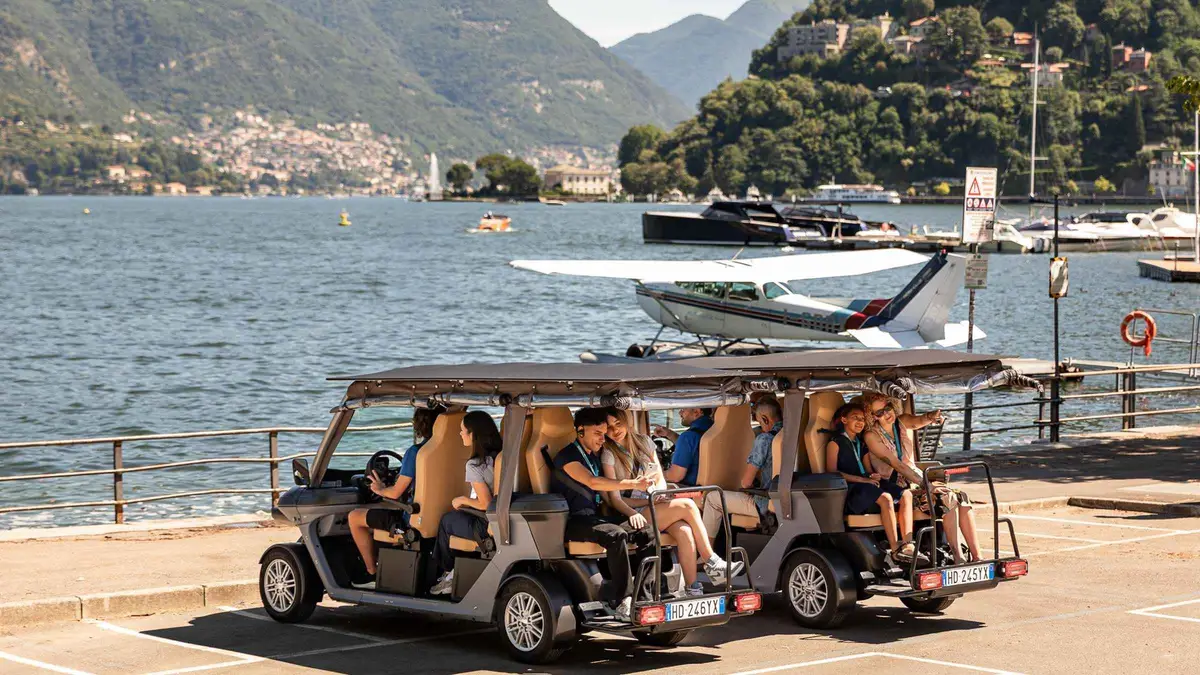
The walk from the pier on Piazza Cavour takes a few minutes.
San Fedele, the Walls and Porta Torre
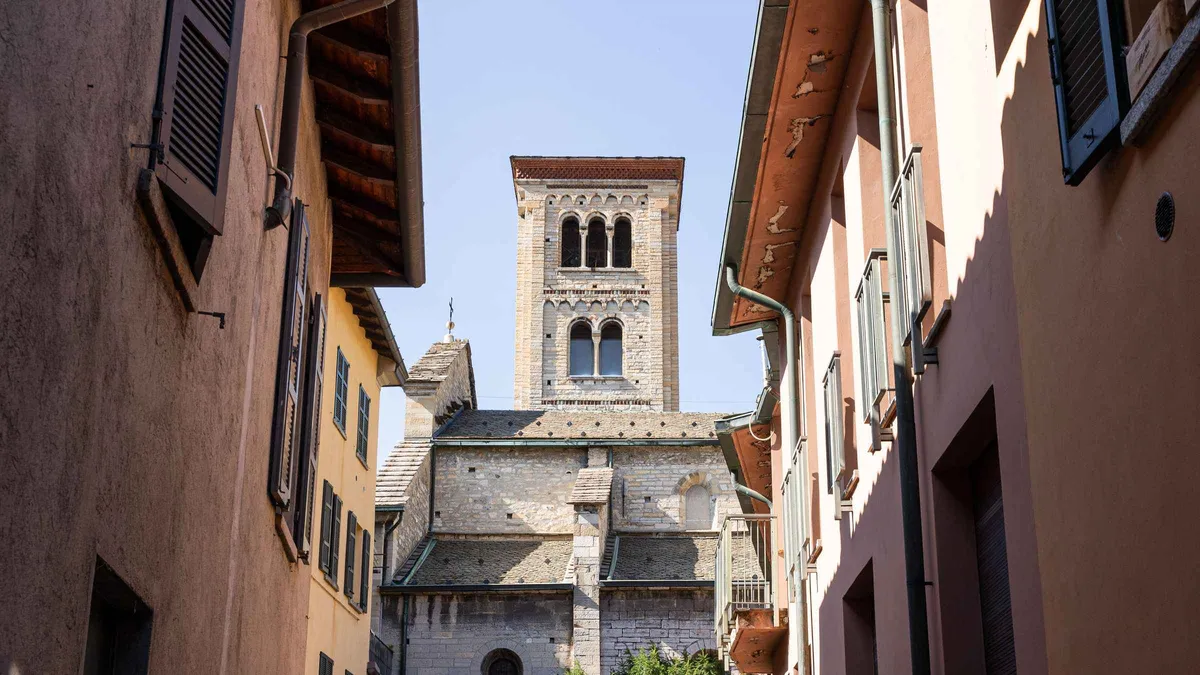
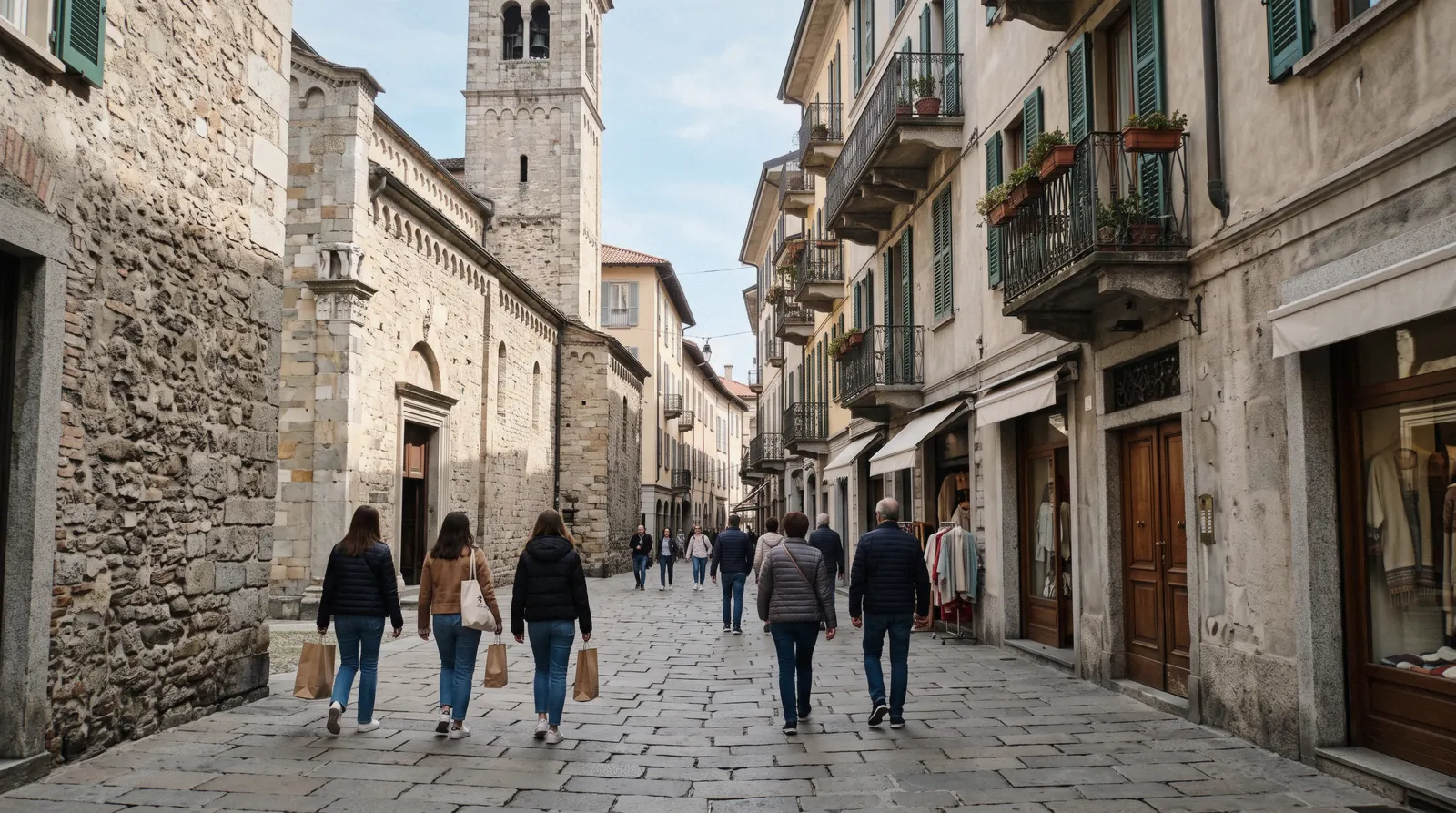
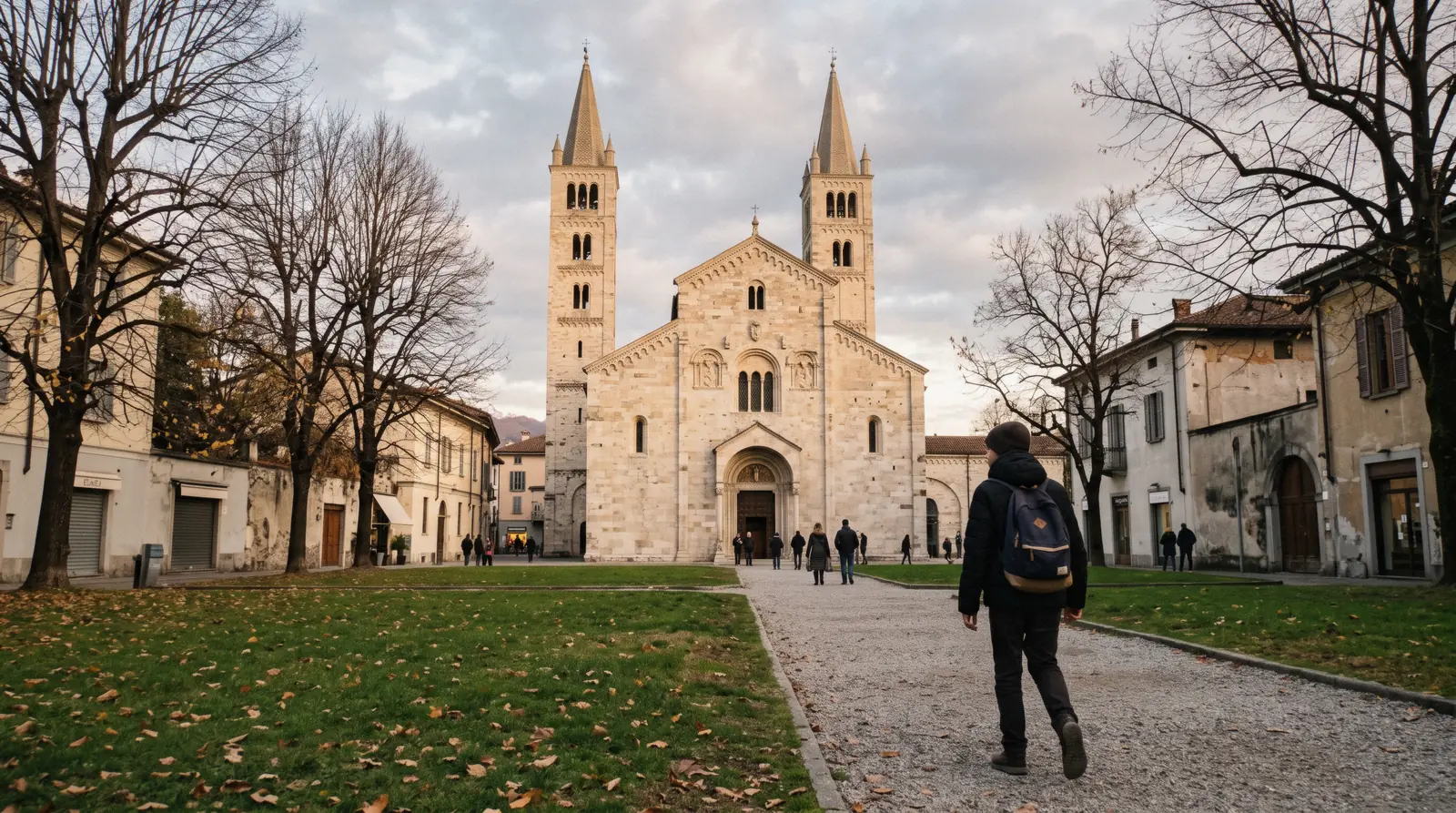
From the cathedral square the streets keep the grid of the Roman town. The basilica of San Fedele anchors a small piazza a few minutes away that still feels local in the early evening. Keep walking south and the medieval wall closes the quarter at Porta Torre, the tall stone gate tower on the road in from the south.
The wall walk and the gates are explained on the walls page, which also shows how the medieval circuit sits on top of the older Roman outline. This stretch of the old town is compact, flat and best in the morning before the tour groups arrive at the cathedral.
The Lakefront, Tempio Voltiano and the Monumento ai Caduti
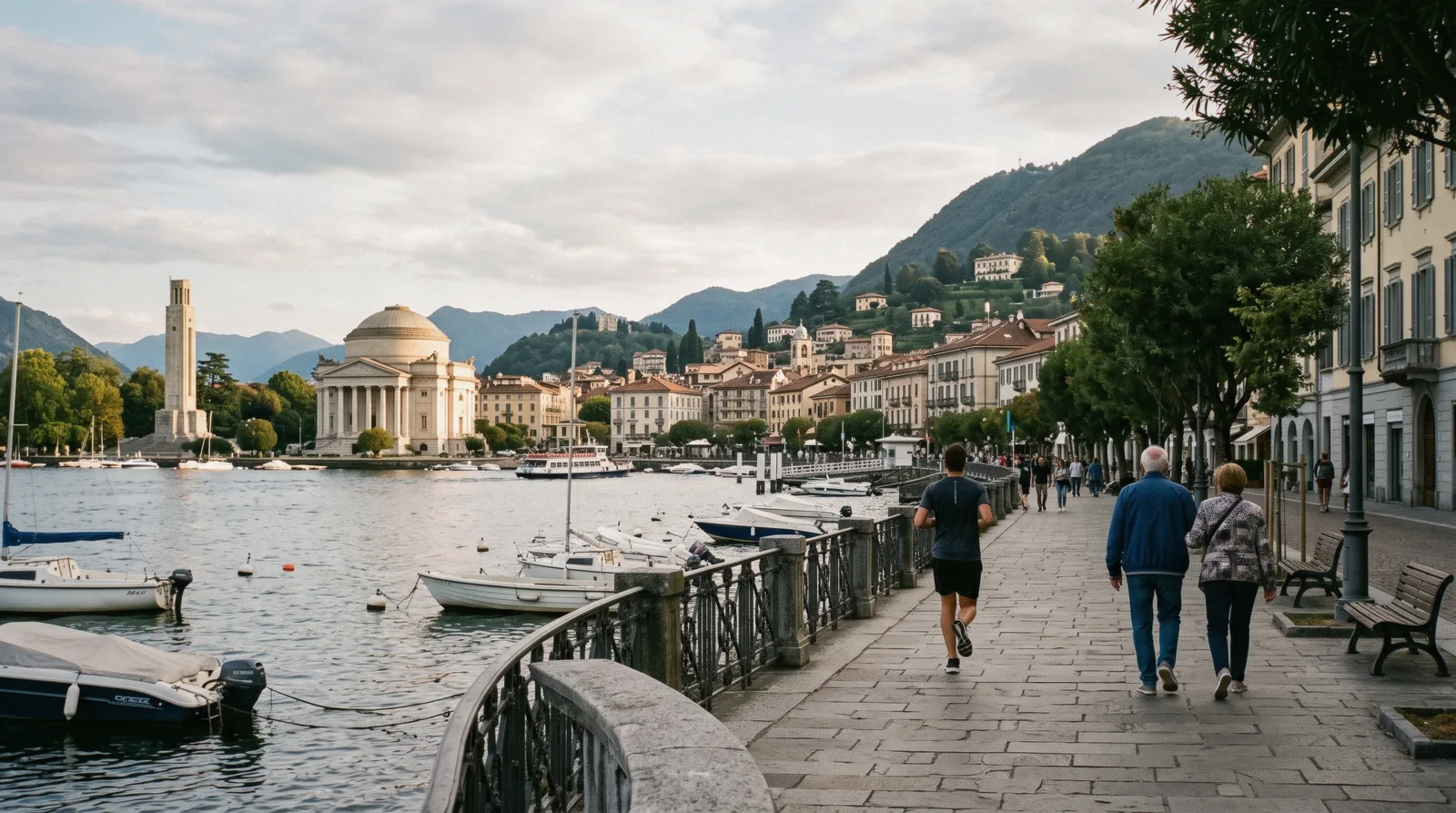
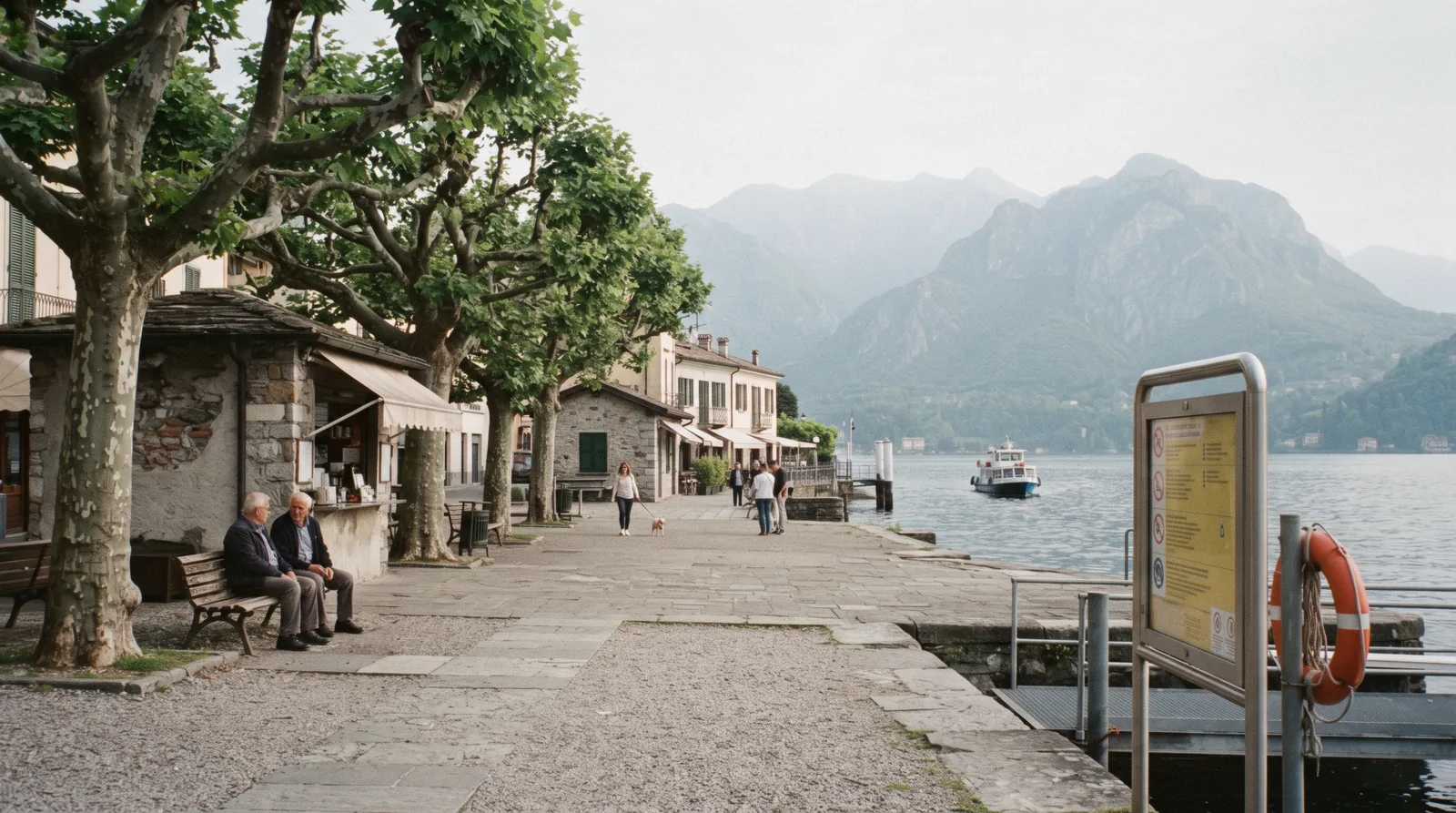
Come back down to the water and follow the promenade from Piazza Cavour through the public gardens. The walk ends at the Tempio Voltiano, the neoclassical rotunda built to house the instruments and papers of Alessandro Volta, the Como-born inventor of the electric battery. It opens Tuesday to Sunday 10:00 to 18:00 with last entry at 17:30 and closes Mondays.
Nearby stands the Monumento ai Caduti, the war memorial Giuseppe Terragni built from a drawing by Antonio Sant'Elia, rising over the water at the end of the gardens. The lakefront is the easiest hour in the city and free the whole way.
Casa del Fascio and Terragni's Rationalism
Architecture students cross Europe for this one. Giuseppe Terragni's Casa del Fascio, finished in the 1930s, is the landmark of Italian rationalism, a glass-and-marble grid of a building a few steps from the cathedral. It is not a walk-in museum.
Visits happen only on scheduled guided tours led by the architect Attilio Terragni, Giuseppe Terragni's great-grandson. The booking mechanics, the visit dates and the rules are set out on the Casa del Fascio page. If your timing does not fit a tour, the building can still be admired from the street, and the Monumento ai Caduti by the lakefront gives a second Terragni work without any booking at all.
Villa Olmo Park
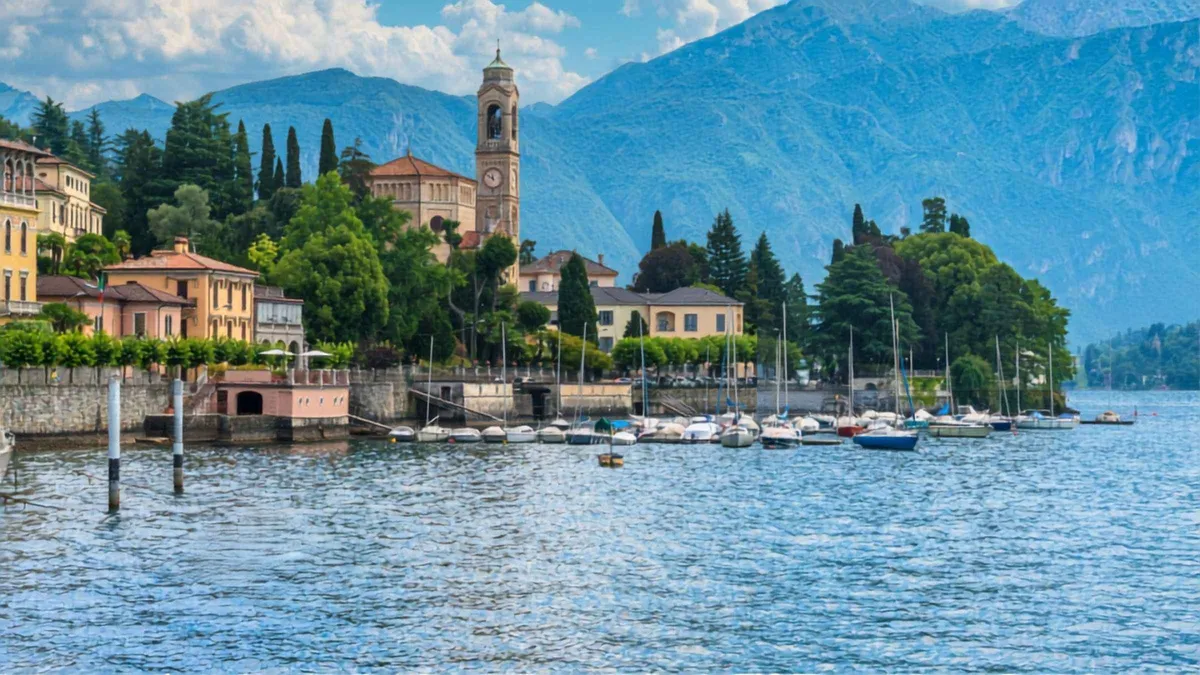
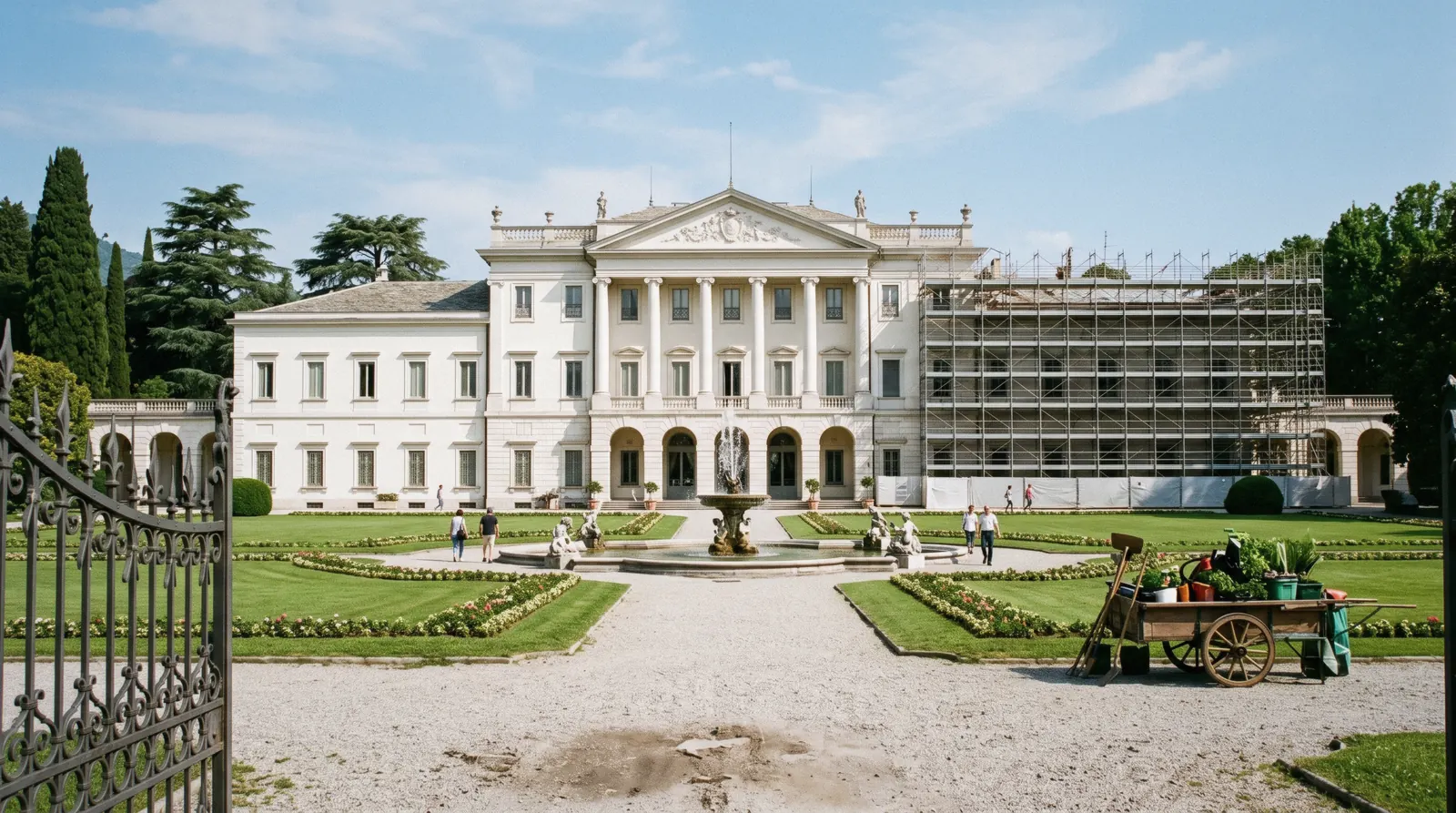
West along the lake, past the old Borgo Vico quarter, Villa Olmo sits with its lawns running to the water. Be clear about the current state: the villa building is closed for restoration work. The park is open and free to enter, and it is the best green space on the city waterfront, with lawns, paths and views back towards Brunate.
Access is only partially accessible for reduced mobility, which the Villa Olmo page explains in full. Beside the park the lido offers the simplest swim close to the centre. A visit combines well with the lakefront walk west out of town, and the return by boat from Cernobbio turns it into a half-day circuit.
The Funicular, Brunate and the Faro Voltiano
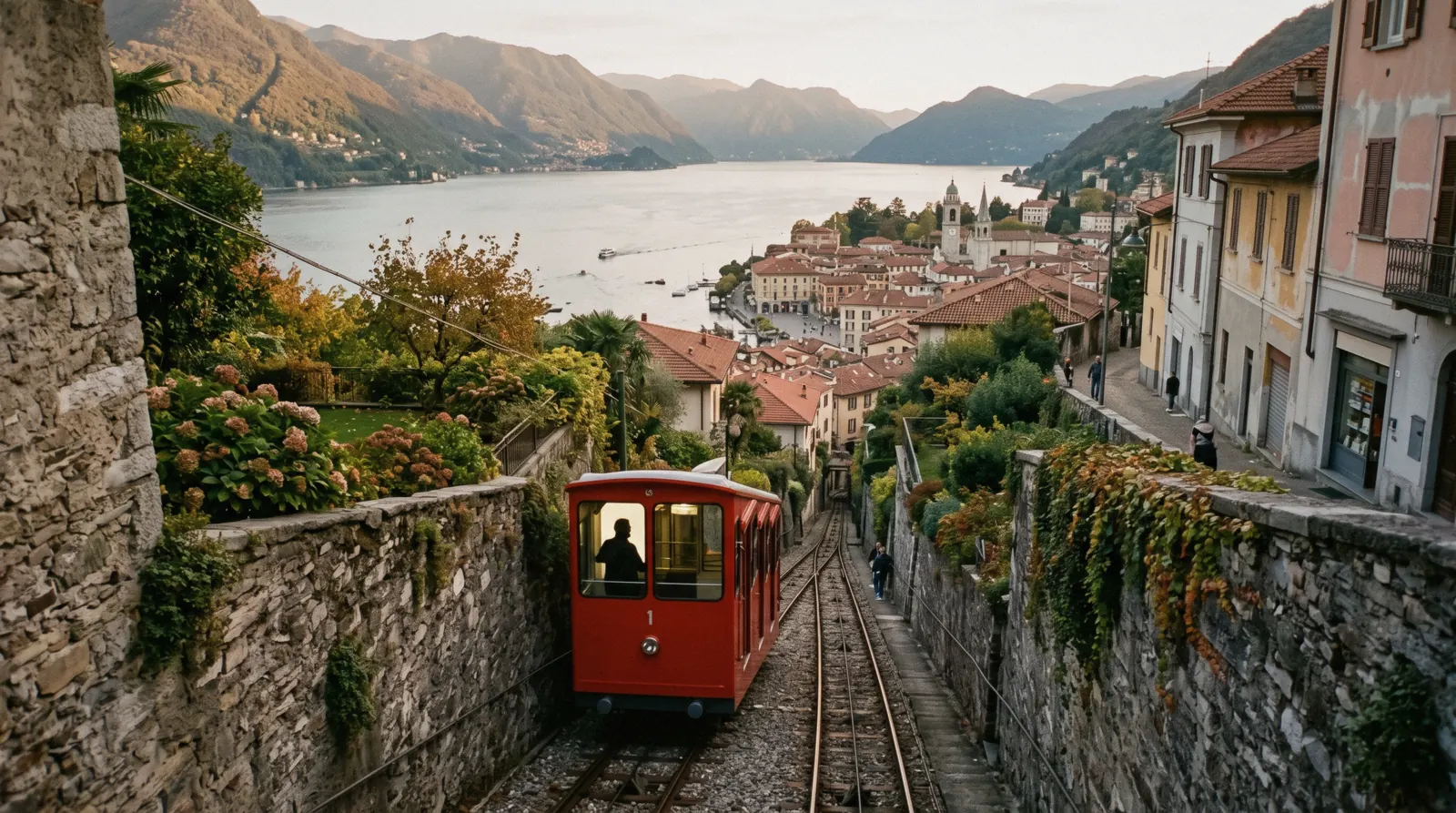
End the day high. The funicular leaves from Piazza Alcide De Gasperi 4 on the lakefront and climbs to Brunate in 7 minutes, running daily from 06:00 to midnight every 12 to 15 minutes. A one-way ticket is $4.27 (€3.70), the return $8.54 (€7.40), and children up to 12 pay $2.88 (€2.50) one way.
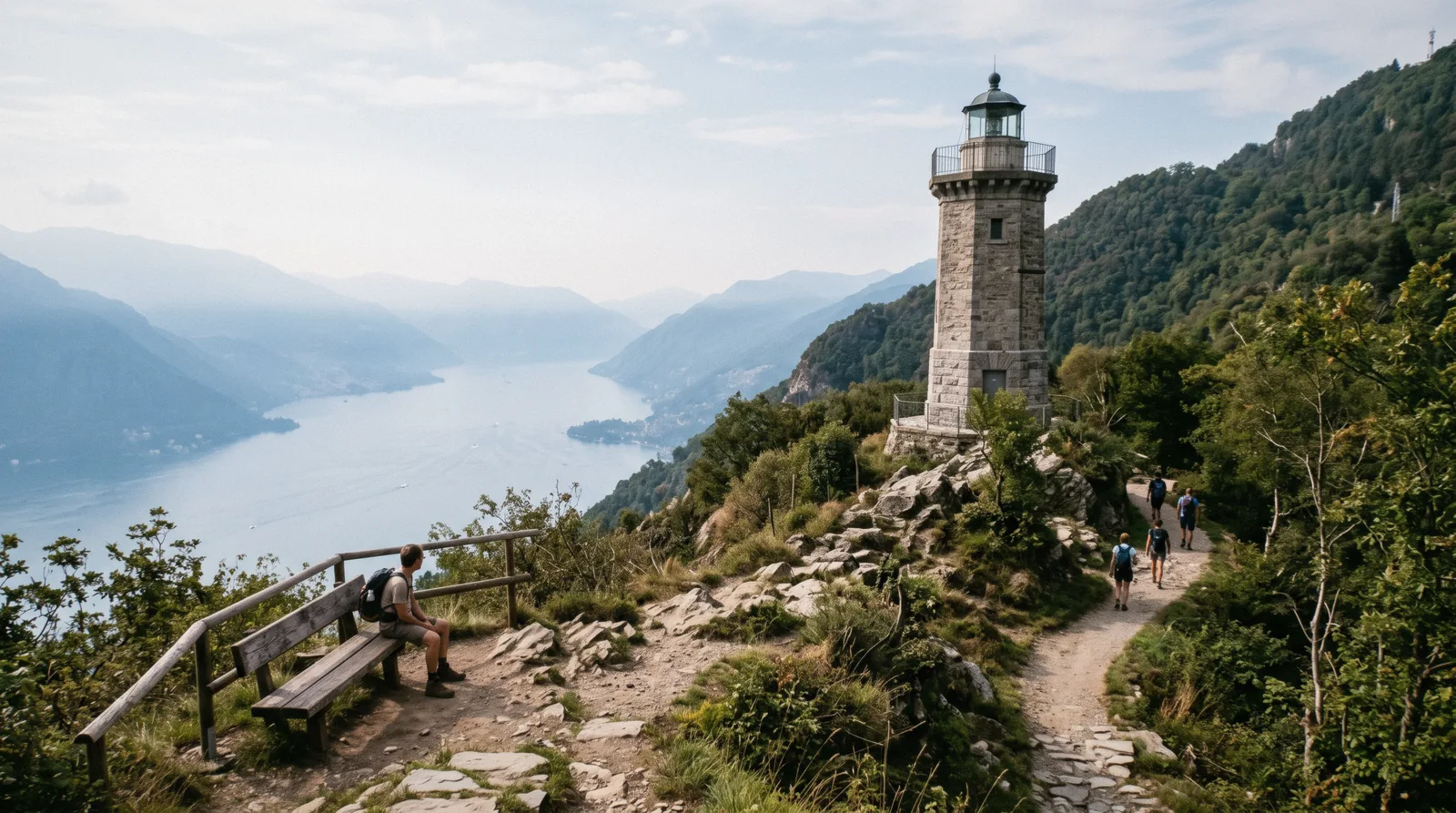
At the top, the village lanes and the terraces look down on the whole southern basin of the lake, and the Volta lighthouse, the Faro Voltiano, stands above the roofs, closed since 2024 and seen from outside. Walkers can skip the return car and come down on foot, and the Brunate trail page covers that route. Full fares, hours and the trail notes are on the funicular page.
 Como Travel Guide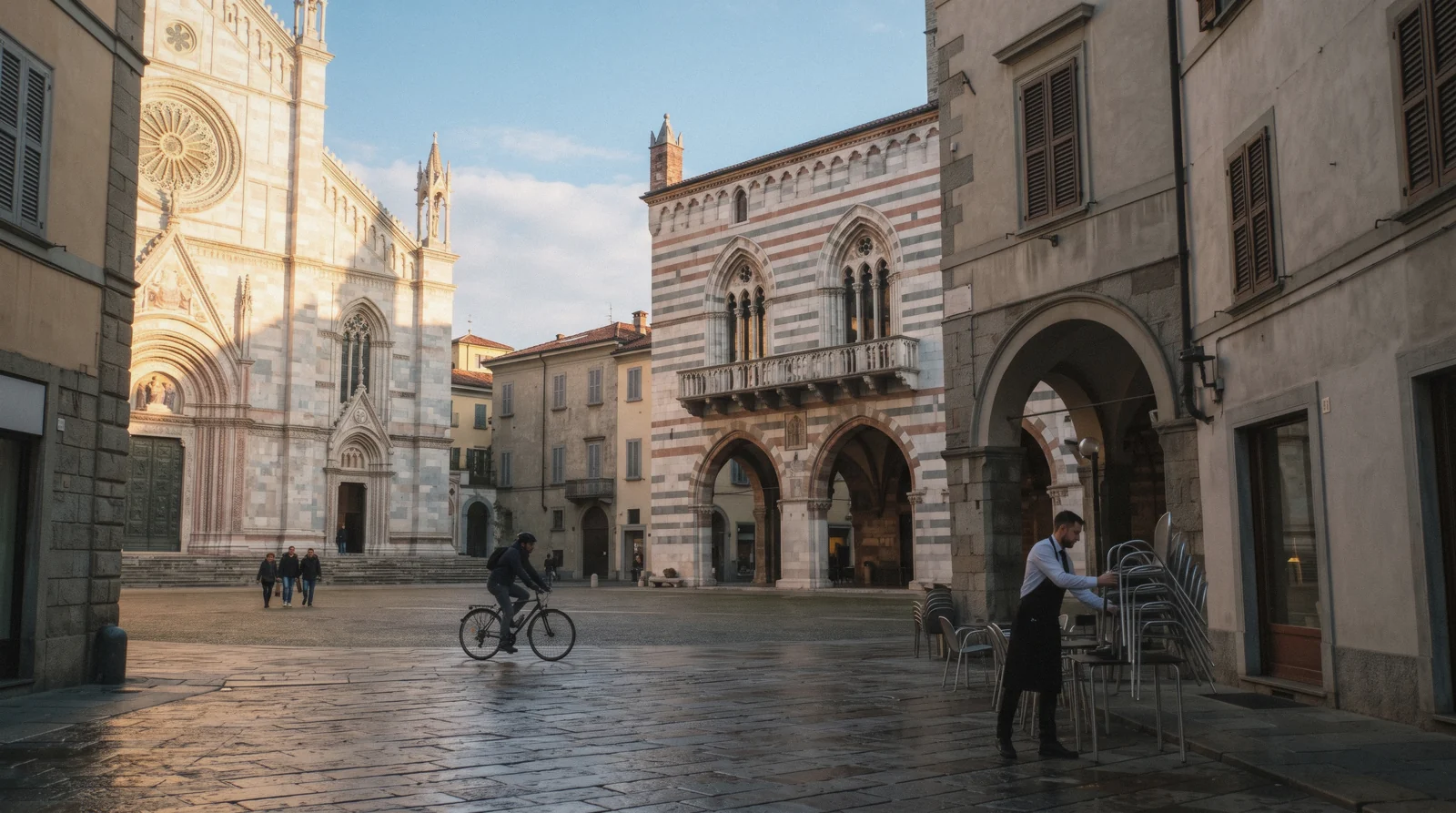
 from $56.40